
"coffee planting density"
2000 article(s) found

The lowest continent in the world where coffee is grown.
The lowest continent in the world where coffee is grown, simply speaking, the higher the altitude, the better the taste of coffee beans. Coffee beans grown at high elevations have pleasant acidity, rich aroma and rich taste, which everyone likes; on the contrary, coffee grown at low elevations has almost no sour taste, single taste and plain taste. That's why baristas always emphasize the sea.

Introduction of double washing treatment of washed coffee beans by Kenya AA Lumu Qiya Farmers' Cooperative Union
Professional coffee knowledge exchange more coffee bean information please follow the coffee workshop (Wechat official account cafe_style) Kenya Coffee-Limu Muchia Cooperative Tambaya processing Plant Pearl round beans TOP washed Kenya Nyeri Rumukia FCS Thunguri Peaberry TOP Kenya Pearl Round beans TOP Lumuchia Cooperative Songri processing Plant Flavor

Is the higher the altitude, the better the flavor description of coffee the higher the altitude, the better the flavor description.
The higher the altitude, the better the flavor description of coffee is the higher the altitude is, the better the flavor description is. The growing and breeding of coffee has specific requirements for environmental conditions, such as calm wind, warm cool, shaded or semi-shaded environment. In other words, coffee can not be grown and produced in any environment. In other words, coffee production is regional. Most of the coffee producing areas in the world are distributed on the tropical plateau or

Introduction to the characteristics of taste grinding scale for flavor description of Costa Rican coffee bean manor
Costa Rican Coffee Manor Flavor description Taste Grinding scale Variety characteristics Coffee Grade according to the altitude of the producing area, according to the density of beans: SHB,strictly hard bean, very hard beans 3900 feet (about 1200m) GHB,good hard bean, hard beans 3300 feet (about 1000m) MHB,medium hard bean, medium beans 1600 feet (about 500m)

What is the reason for the higher the altitude, the better the quality of coffee beans?
The reason why coffee beans are planted at higher altitude and better quality is that the coffee beans with the best quality are usually strong and grow at an altitude of more than 4500 meters. The growth of these coffee beans is very slow, so the density of the beans is very high, and the gap in the middle of the beans should be curved. In contrast, coffee beans grown at low elevations usually have a lower density and slightly open gaps in the middle.

Why is there any difference in flavor between coffee beans at high altitude and coffee beans at low altitude
Why is there a difference between coffee beans at high altitude and coffee beans at low altitude? coffee growth and reproduction have specific requirements for environmental conditions, such as calm wind, cool, shady or semi-shaded environment. In other words, coffee can not be grown and produced in any environment. In other words, coffee production is regional. Most of the coffee producing areas in the world are distributed in tropical plateaus or high elevations.

Catimor Katim Coffee catimor Katim Coffee good? Katim Coffee beans?
Professional coffee knowledge exchange more coffee bean information Please follow Coffee Workshop (Wechat official account cafe_style) Catimor was developed by scientists in Portugal in 1959 to find magic recipes for high yield, high disease resistance and small plants (that is, high-density cultivation). This variety is a hybrid of Timor (resistant to coffee leaf rust due to its Robusta genetic rhizome) and Katula.
Costa Rican Coffee flavors Costa Rican Coffee characteristics Costa Rican Saint
Coffee cherries are hand-selected by coffee farmers to remove overripe or immature cherries, and then produce them. A 3-disc aagaarde peeling machine is used to remove the peel and pulp, and then the machine is divided into three grades according to the density of coffee beans. Grade 1 and 2 raw beans are fermented separately, while grade 3 is low-quality raw beans. The raw beans were fermented in a cool place for about 24 to 36 hours.
Catimor Katim Coffee tastes good catimor Katim Coffee beans are good
Professional coffee knowledge exchange more coffee bean information Please follow Coffee Workshop (Wechat official account cafe_style) Catimor was developed by scientists in Portugal in 1959 to find magic recipes for high yield, high disease resistance and small plants (that is, high-density cultivation). This variety is a hybrid of Timor (resistant to coffee leaf rust due to its Robusta genetic rhizome) and Katula.
Fragrant Costa Rican Coffee Saint Roman Coffee Flavor, characteristics, taste and Manor introduction
Coffee cherries are hand-selected by coffee farmers to remove overripe or immature cherries, and then produce them. A 3-disc aagaarde peeling machine is used to remove the peel and pulp, and then the machine is divided into three grades according to the density of coffee beans. Grade 1 and 2 raw beans are fermented separately, while grade 3 is low-quality raw beans. The raw beans were fermented in a cool place for about 24 to 36 hours.
Fragrant Costa Rican Coffee Saint Roman Coffee Flavor, characteristics, taste and Manor introduction
Coffee cherries are hand-selected by coffee farmers to remove overripe or immature cherries, and then produce them. A 3-disc aagaarde peeling machine is used to remove the peel and pulp, and then the machine is divided into three grades according to the density of coffee beans. Grade 1 and 2 raw beans are fermented separately, while grade 3 is low-quality raw beans. The raw beans were fermented in a cool place for about 24 to 36 hours.

Fruit sweet Costa Rican Saint Roman Coffee Variety Taste Flavor Fine Coffee beans
Coffee cherries are hand-selected by coffee farmers to remove overripe or immature cherries, and then produce them. A 3-disc aagaarde peeling machine is used to remove the peel and pulp, and then the machine is divided into three grades according to the density of coffee beans. Grade 1 and 2 raw beans are fermented separately, while grade 3 is low-quality raw beans. The raw beans were fermented in a cool place for about 24 to 36 hours.
Fragrant Costa Rica plus Saint Roman Coffee Flavor, characteristics, taste and Manor introduction
Coffee cherries are hand-selected by coffee farmers to remove overripe or immature cherries, and then produce them. A 3-disc aagaarde peeling machine is used to remove the peel and pulp, and then the machine is divided into three grades according to the density of coffee beans. Grade 1 and 2 raw beans are fermented separately, while grade 3 is low-quality raw beans. The raw beans were fermented in a cool place for about 24 to 36 hours.

The higher the altitude, the better the coffee beans.-the finer the coffee beans, the better?
The higher the altitude, the better the coffee beans are grown-the finer the coffee beans, the better? altitude is only one of the many factors to measure the quality of coffee, but it is definitely the most important one. The next time you go to the coffee shop, please ask the barista to tell you the origin of the coffee in the cup, which will not only enrich your coffee knowledge, but also improve the quality of your overall coffee experience.

Costa Rican Coffee with Sweet Fruit Variety characteristics of Fine Coffee beans in Manor
Coffee cherries are hand-selected by coffee farmers to remove overripe or immature cherries, and then produce them. A 3-disc aagaarde peeling machine is used to remove the peel and pulp, and then the machine is divided into three grades according to the density of coffee beans. Grade 1 and 2 raw beans are fermented separately, while grade 3 is low-quality raw beans. The raw beans were fermented in a cool place for about 24 to 36 hours.

Fruit sweet Costa Rican coffee varieties taste characteristics of manor boutique coffee bean flavor
Coffee cherries are hand-selected by coffee farmers to remove overripe or immature cherries, and then produce them. A 3-disc aagaarde peeling machine is used to remove the peel and pulp, and then the machine is divided into three grades according to the density of coffee beans. Grade 1 and 2 raw beans are fermented separately, while grade 3 is low-quality raw beans. The raw beans were fermented in a cool place for about 24 to 36 hours.

Costa Rican rosy summer coffee beans of the Goddess Manor
Coffee was first introduced in 1720 according to CR official data. Baidu sources show that 1729 were imported from Cuba. In short, coffee has taken root in CR in the 18th century. It was first planted in the central valley (central valley). In the 19th century, the government vigorously promoted the cultivation of coffee, including the allocation of land as long as it was willing to cultivate coffee, and that it could become a landowner after five years of cultivation.

Sweet smell, sweet fruit of chocolate beans, forgettable Costa Rican St. Roman coffee style
Coffee cherries are hand-selected by coffee farmers to remove overripe or immature cherries, and then produce them. A 3-disc aagaarde peeling machine is used to remove the peel and pulp, and then the machine is divided into three grades according to the density of coffee beans. Grade 1 and 2 raw beans are fermented separately, while grade 3 is low-quality raw beans. The raw beans were fermented in a cool place for about 24 to 36 hours.

Where can I buy coffee beans on the Royal Coffee Network of the St. Roman processing Plant in Costa Rica? Where are the coffee beans going?
1. When buying beans online, you should pay attention to the production date, shelf life, packaging and sealing, the roasting degree of coffee beans, the types of coffee beans, and your utensils to determine what kind of beans you want. If you use blue mountain beans to make ESP, it is indeed a maverick way, but it is also too unprofessional and expensive, and the taste is not very good. The production date must be at least
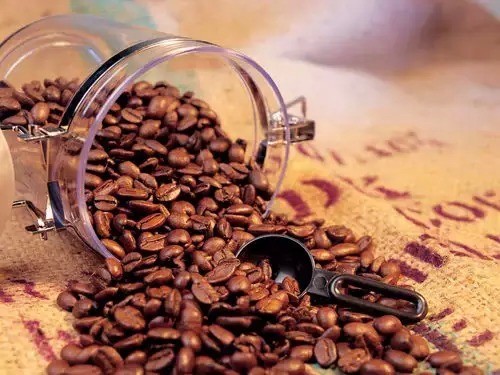
Taste characteristics of Costa Rica plus Saint Roman Coffee with Sweet Fruit Flavor Flavor Coffee Bean
Coffee cherries are hand-selected by coffee farmers to remove overripe or immature cherries, and then produce them. A 3-disc aagaarde peeling machine is used to remove the peel and pulp, and then the machine is divided into three grades according to the density of coffee beans. Grade 1 and 2 raw beans are fermented separately, while grade 3 is low-quality raw beans. The raw beans were fermented in a cool place for about 24 to 36 hours.